
Joseph Bramah patented the hydraulic press in 1795.While working at Bramah’s shop, Henry Maudslay suggested a cup leather packing. needed] Because it produced superior results, the hydraulic press eventually displaced the steam hammer for metal forging.
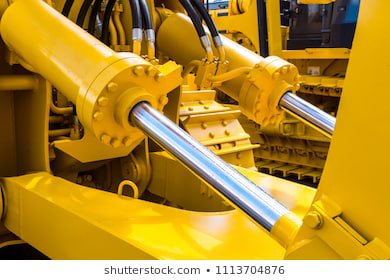
Harry Franklin Vickers was called the “Father of Industrial Hydraulics”
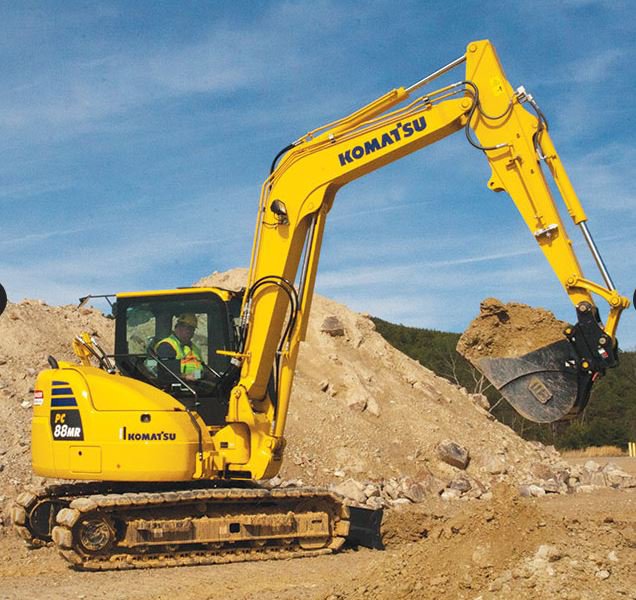
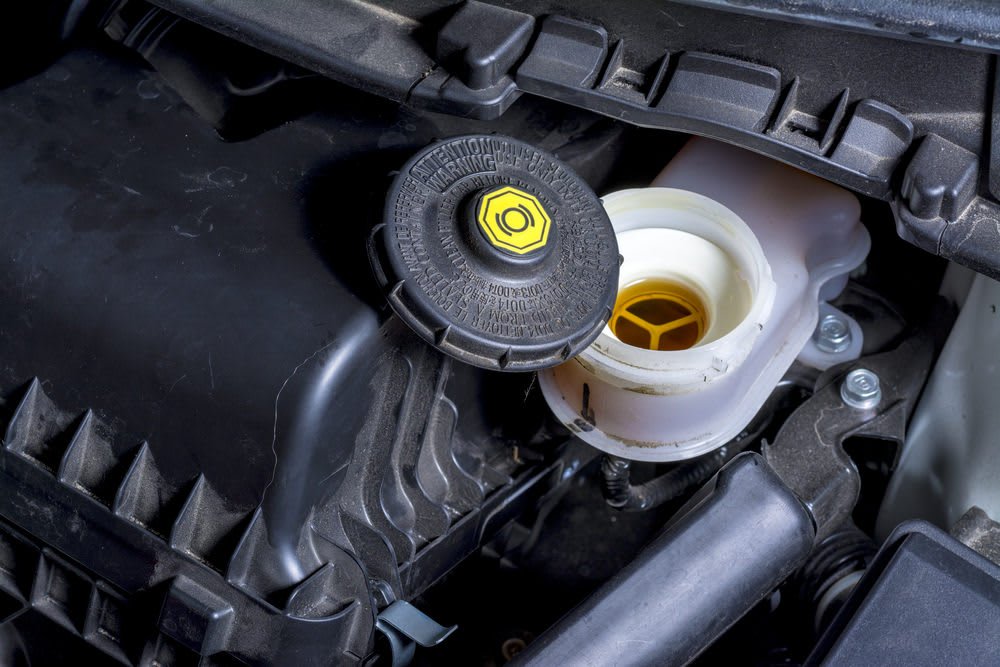
Brake fluid is a type of hydraulic fluid used in hydraulic brake and hydraulic clutch applications in automobiles, motorcycles, light trucks, and some bicycles. It is used to transfer force into pressure, and to amplify braking force. It works because liquids are not appreciably compressible.
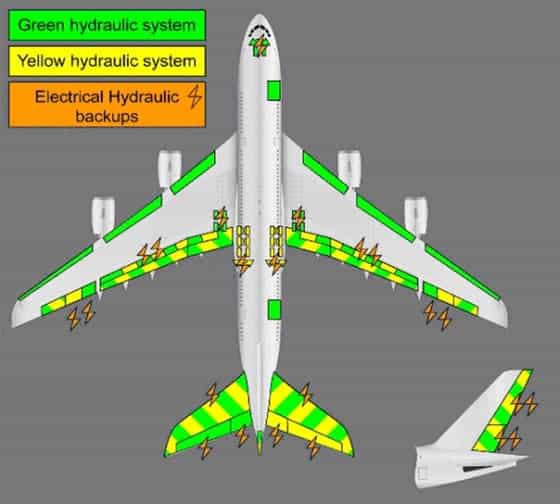
It is very sad for a man to make himself servant to a thing, his manhood all taken out of him by the hydraulic pressure of excessive business. I should not like to be merely a great doctor, a great lawyer, a great minister, a great politician I should like to be also something of a man.
Benedetto CastelliEdit
In 1619 Benedetto Castelli (1576 – 1578–1643), a student of Galileo Galilei, published the book Della Misura dell’Acque Correnti or “On the Measurement of Running Waters”, one of the foundations of modern hydrodynamics. He served as a chief consultant to the Pope on hydraulic projects, i.e., management of rivers in the Papal States, beginning in 1626.[29]
Blaise PascalEdit
Blaise Pascal (1623–1662) studied fluid hydrodynamics and hydrostatics, centered on the principles of hydraulic fluids. His discovery on the theory behind hydraulics led to the invention of the hydraulic press by Joseph Bramah, which multiplied a smaller force acting on a smaller area into the application of a larger force totaled over a larger area, transmitted through the same pressure (or same change of pressure) at both locations. Pascal’s law or principle states that for an incompressible fluid at rest, the difference in pressure is proportional to the difference in height and this difference remains the same whether or not the overall pressure of the fluid is changed by applying an external force. This implies that by increasing the pressure at any point in a confined fluid, there is an equal increase at every other point in the container, i.e., any change in pressure applied at any point of the fluid is transmitted undiminished throughout the fluids.
Jean Léonard Marie PoiseuilleEdit
A French physician, Poiseuille (1797–1869) researched the flow of blood through the body and discovered an important law governing the rate of flow with the diameter of the tube in which flow occurred.[30][citation needed]
In the UKEdit
Several cities developed citywide hydraulic power networks in the 19th century, to operate machinery such as lifts, cranes, capstans and the like. Joseph Bramah[31] (1748–1814) was an early innovator and William Armstrong[32] (1810–1900) perfected the apparatus for power delivery on an industrial scale. In London, the London Hydraulic Power Company[33] was a major supplier its pipes serving large parts of the West End of London, City and the Docks, but there were schemes restricted to single enterprises such as docks and railway goods yards.
Hydraulic modelsEdit
After students understand the basic principles of hydraulics, some teachers use a hydraulic analogy to help students learn other things. For example:
- The MONIAC Computer uses water flowing through hydraulic components to help students learn about economics.
- The thermal-hydraulic analogy uses hydraulic principles to help students learn about thermal circuits.
- The electronic–hydraulic analogy uses hydraulic principles to help students learn about electronics.
The conservation of mass requirement combined with fluid compressibility yields a fundamental relationship between pressure, fluid flow, and volumetric expansion, as shown below [34]:{\displaystyle {\frac {dp}{dt}}={\frac {\beta }{V}}\cdot \left(\sum _{IN}Q-{\frac {dV}{dt}}\right)}
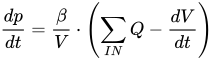
Assuming an incompressible fluid or a “very large” ratio of compressibility to contained fluid volume, a finite rate of pressure rise requires that any net flow into the contained fluid volume create a volumetric change.
 Site Title